20+
episodes shipped
3 yrs
leading the section
100+
students led across the semesters
Context
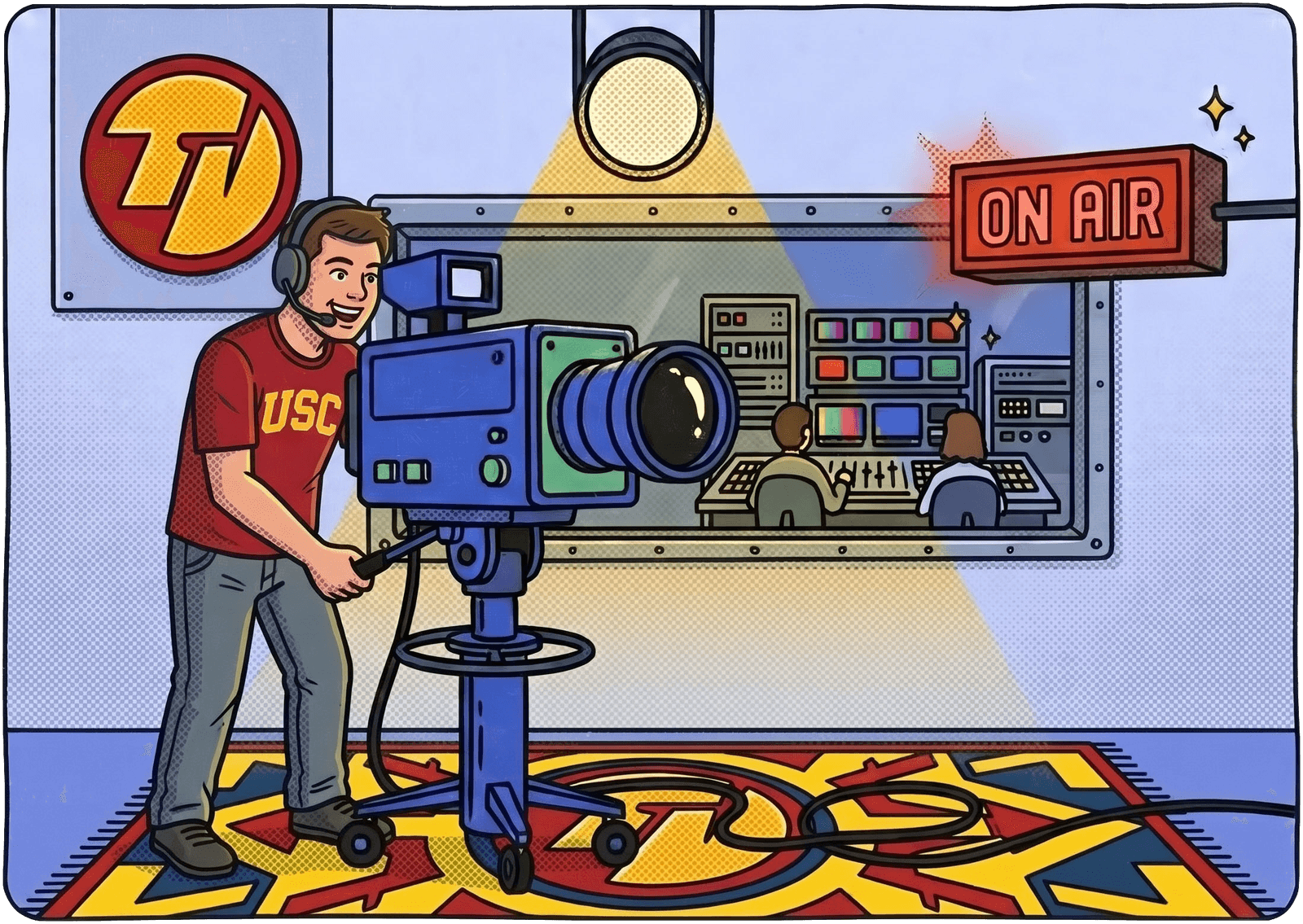
After one semester as a student, I chose to come back as showrunner of the Game Show section of USC’s student TV station, to follow my creative passion and learn from pioneering reality TV producer JD Roth (co-creator of The Biggest Loser, producer of Beauty and the Geek). The team’s motto was “We Always Make Air”: the show goes live whether or not it’s ready.
The problem
The whole crew was students, from executive producers and story teams to casting, editors and the technical crew. As showrunner I owned the creative direction and making sure the show went live, but I had no grades and no authority over anyone. The only way to ship was influence.
What I did
Set the timeline, then chased it
Delegated by strength and followed up across every workstream.
Production timeline first, work assigned to whoever was actually good at it, then follow-ups across the creative, technical and business sides. With a student crew and no authority, the follow-up is the job — nothing chases itself.
Had the hard conversation early
When someone was slipping, that week — not the night before air.
The tempting move with a crew you don’t manage is to absorb the slip quietly and fix it yourself at midnight. That works exactly once, and it teaches everyone the deadline isn’t real. Raising it early was less comfortable and much cheaper.
Found the show a budget
Outside sponsorship, so we had money and not just a schedule.
Secured sponsors from outside the university — Dulce Cafe for “Campus Crush” among them — which turned a production running on goodwill into one that could actually pay for things.
Ran workshops for the crew
Teaching the package team beat covering for them.
Recurring workshops for the Package Production Team. A few hours up front, against covering the same gaps show after show.
What it taught me
A fixed ship date forces real prioritization. When air time can’t move, scope has to, and the job is deciding what gets cut with the people who care most about it.
Up next
Designing learning for a spatial interface