About me
Hi, I’m Amman.
Product person, storyteller, home cook.
I grew up moving: four countries, five languages, and a new school every few years. Being the new kid that often teaches you to watch before you talk, and to notice what feels obvious to one group and invisible to another. That habit turned into a career.
Today I do product work at SHOOK Research, where I sit closest to the people who use what we build. Outside of work I’m usually watching something, cooking something, or explaining something to anyone who’ll listen.



Global perspective
The long way here
I’m Pakistani American. I was born in New York, spent three years of my childhood in Lahore, was homeschooled in Toyama, lived in Melbourne, went to an international school in Nagoya, and moved out on my own to Los Angeles at 15.

Every move reset the defaults
New country, new rules for how people talk, eat, queue and say no. You learn fast that your defaults are not everyone’s defaults, which is the first thing I check for in any product decision.
Five languages taught me to listen for meaning
Switching languages every day trains you to hear what someone means, not just what they say. In user research, that gap is where the insight usually lives.
Being on my own early made me an owner
Homeschooling and moving out at 15 meant nobody was going to organize things for me. I still work that way: if something needs doing, I pick it up.
My motto
Don’t ask if it’s possible.
Ask how it can be done.
The through line
Everything feeds the same job
I didn’t take a straight line to product. I took film classes, ran a live TV show, learned to build, and kept ending up in the same role: the person asking who this is for. Here’s what fed into it.
Talking to users first
Asking before deciding, then letting the answers outrank my own opinion.
50+ advisors, five cities
I asked about the portal, the survey and the whole experience, then turned the answers into a ranked friction list the development partner scoped against, so the roadmap follows what advisors told me.
Read it60,000 support emails
Connected an LLM to the shared mailbox, sampled the archive and sorted it into frequency-ranked themes — then validated every top theme against what advisors told me in person.
Read it9 testers reshaped the build
Testing with people outside the team turned a cosmetic request for custom skins into a colorblind-accessibility fix, and a split on animation speed into a speed control.
Read it
Shipping without authority
Every team I’ve shipped with was student-run, partner-led, or otherwise not mine to command.
20+ live episodes, 100+ students
Live episodes under producer JD Roth, leading 100+ students over the semesters across creative, technical and sponsorship workstreams, with no formal authority over anyone involved. Deadlines held because the crew wanted them to.
Read itBrought in sponsorship
Brought in outside sponsorship so the show had money and not just a schedule — well outside the scheduling remit the role was defined by.
Read itHalf an FTE of data entry gone
5,000+ orders on an advisor merchandise store. API access wasn’t available, so I built an order webhook and a browser automation for fulfillment tracking.
Read itLunch ordering, automated
A weekly ritual nobody owned, full of manual chasing. I took the busywork out of it and let the week run itself.
Read it
Building it myself
Enough engineering to scope honestly, argue specifics, and prototype the argument.
B.S. Computer Science, USC
Viterbi School of Engineering: software engineering, databases, AI, algorithms. Enough to read what my team ships and scope against what’s actually there.
Serverless KYC pipeline
Spotted that manual identity review was the bottleneck in a client’s onboarding, then built the pipeline that removed it: an S3 upload triggers Lambda, Rekognition runs facial analysis, results land in DynamoDB.
Read itPenciled
A calendar you write instead of type. In development, and the fastest way I know to test an interaction idea is to build it.
Read itSnitchDog
An AI coach that tells the people you respect when you go quiet, judged week by week rather than day by day. Shipping to TestFlight soon.
Read it
Judging the product
Having a view on what’s worth building, and being able to say why the obvious answer is wrong.
Nine months of free Granola
Chose a note taker for the team, found it failed on exactly the calls we couldn’t make ourselves, and ran feedback sessions with the vendor on what would fix it. They gave us nine months free in exchange.
Read itSized up a YC competitor
After I’d built the first version of SnitchDog (then called Accountable) I found Overlord, a Y Combinator–backed agent solving the same problem. Rather than copy it, I narrowed: it takes the whole category, I take one niche that’s easier to explain, find and win.
Read itCut multiplayer to ship
Multiplayer and gamification stayed out of scope so the thing actually shipped inside eight sprints. Deciding what not to build was most of the job.
Read itSpeed that isn’t worth the risk
A slow identity check loses a sale, but a wrong approval is a regulatory problem that can cost the exchange its banking partners or its licence. A faster pipeline that lets more mistakes through isn’t a win, however good conversion looks.
Read it
Telling the story
Cinematic arts taught me how a story holds an audience. A roadmap nobody can follow doesn’t get built.
Cinematic arts classes at USC
Film classes alongside CS taught me how a story holds an audience. A roadmap nobody can follow doesn’t get built, however correct it is.
Taught story craft to the crew
Ran recurring workshops for Trojan Vision’s Package Production Team: how to cut a reality-TV package that has a character and an arc, instead of footage in the order it was shot. Teaching it forced me to name what actually makes a segment hold someone.
Read itAudience research, MarketCast
Turned qualitative and quantitative audience research into clear stories for major entertainment clients: why people watched, not just how many.
I shoot and cut my own video
A Sony a7C now, YouTube videos long before that. Framing a shot and explaining something simply turns out to be the same skill a spec and a roadmap need.
It all lands here
Product management
The job where all of the above is the job, not a detour from it.
Interests
Off the clock

Cooking
I’ve been cooking since I was very young, and I still love it. Recipes are just specs you can eat.

Photos & videos
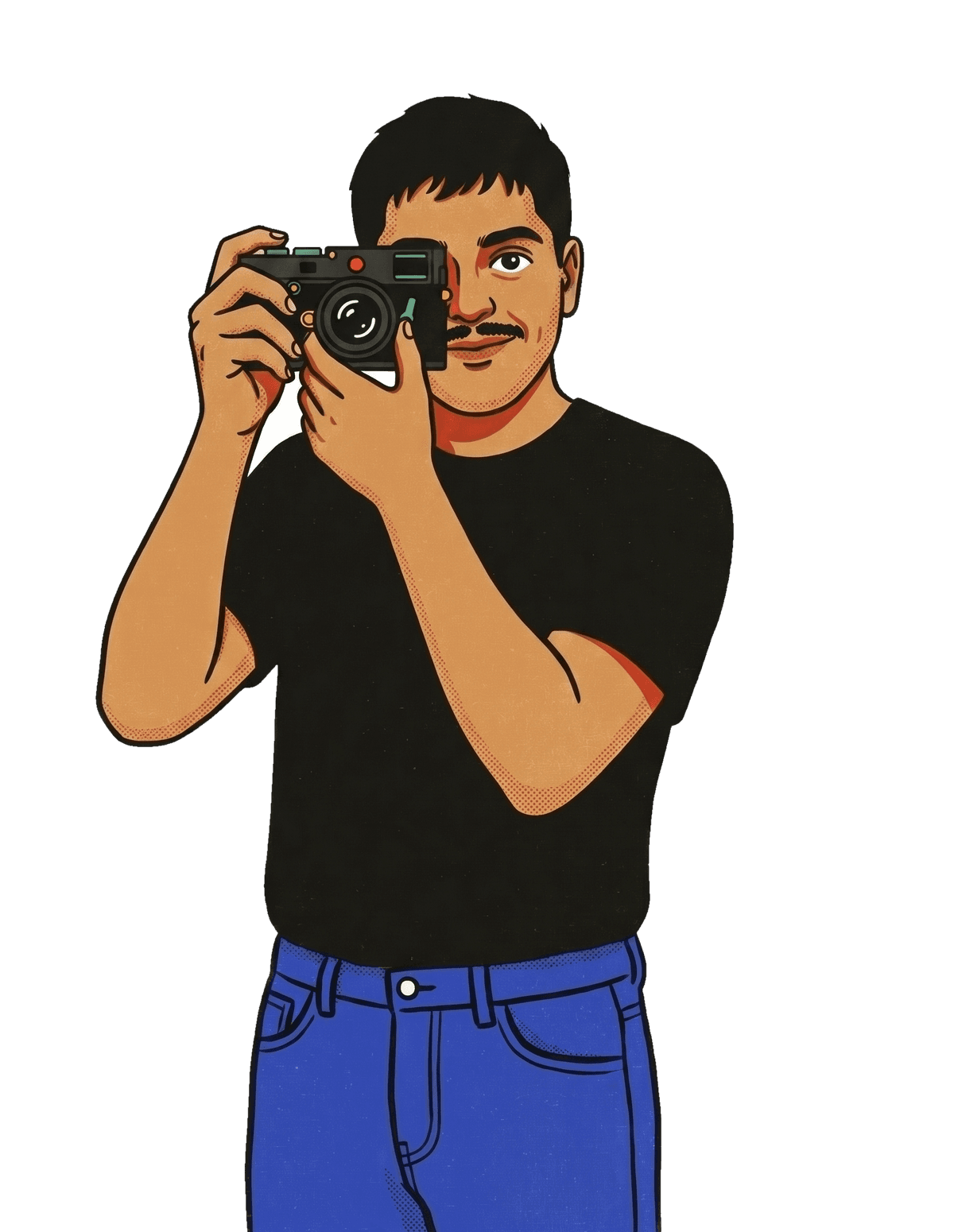
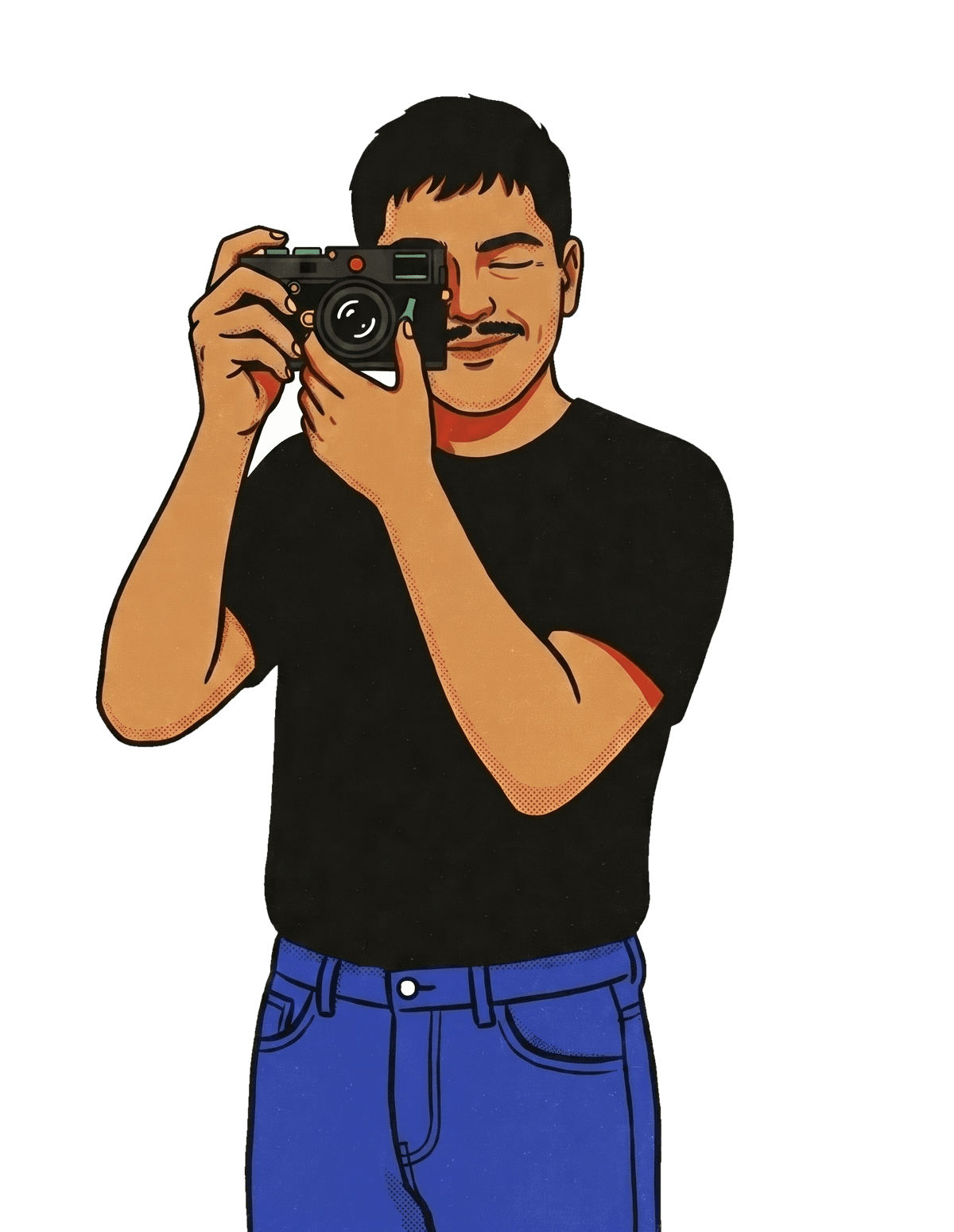
I shoot on a Sony a7C, and I made YouTube videos as a kid. That’s where I learned to frame a story and explain things simply, which I still use every day.

Soccer & basketball
Played soccer in high school. These days it’s pickup basketball with friends.

Film & TV
It’s why I took cinematic arts classes alongside CS. If I didn’t have to be reasonable, I’d be a film director. Maybe one day anyway.
A few things people don’t guess
- I moved out of home at 15.
- I speak five languages: English, Urdu, Hindi, Punjabi and Japanese.
- I was homeschooled in Japan.
- I ran a live game show, leading 100+ students, under the producer behind The Biggest Loser.